
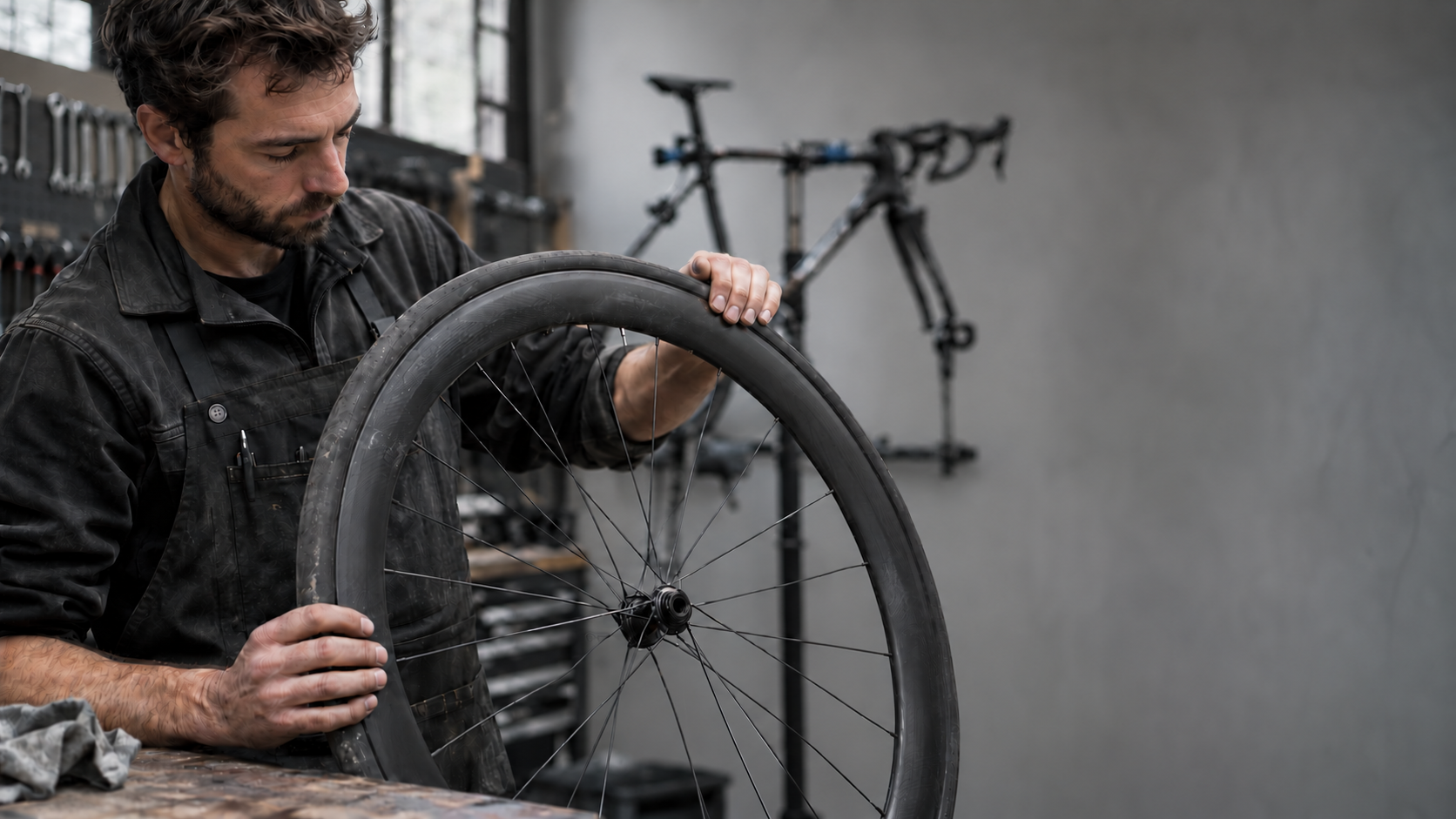
A road wheel that feels rough, develops noise, or reveals a worn bearing during service often sends a mechanic straight to the replacement parts list. For a hub that uses cartridge bearings, however, a matching number on the seal is only the starting point. A few checks before ordering can help avoid a mismatched part and another round of disassembly.
1. Confirm the hub’s bearing design
Not every road hub uses individually replaceable cartridge bearings. Some use an adjustable cup-and-cone design. Even within a cartridge-bearing hub, the hub shell and freehub body may call for different parts. Start with the hub maker’s service information to identify the design, bearing locations, and removal procedure.
2. Verify all three dimensions
Record the designation on the removed bearing, then check its inner diameter, outer diameter, and width. Markings can be incomplete or difficult to read, and a wheel model alone may not identify the exact part fitted to the hub. ARVEN’s bearing measuring guide shows where to take the three measurements. Cross-check them against the hub maker’s information and the bearing you removed.
3. Inspect the axle and bearing seats
A new bearing will not repair a worn axle or a damaged bearing seat. After cleaning, inspect the mating surfaces and shoulders for visible wear, corrosion, or deformation. If the fit is in question, address the hub condition before choosing a replacement bearing.
4. Match the bearing to the job
Bearings with the same dimensions can differ in material, seals, and lubrication. Consider the riding conditions, service needs, and the customer’s budget when comparing options. ARVEN currently offers TEMPO, STORM, and RACE road hub bearing series. Confirm the hub’s requirements and each product’s specifications before selecting a series; a series name alone does not establish compatibility.
5. Plan the installation
Use a fitting tool that applies force to the bearing ring being press-fitted. Avoid transmitting installation force through the balls. Once the bearing is seated, follow the hub maker’s assembly procedure and check for smooth axle rotation and abnormal play. The right replacement part still needs the right installation method.
Keep a short service record: hub make and model, bearing location, removed designation, three dimensions, and the replacement fitted. It gives the shop a useful starting point when the same wheel returns.
Looking for replacement bearings for a road hub? Explore ARVEN’s product specifications. For help checking a model or discussing shop supply, use the product inquiry or partnership contact page.